

President Donald Trump has unveiled the most dramatic immigration policy changes in decades, introducing a $1 million “Gold Card” visa program for wealthy investors while simultaneously imposing a staggering $100,000 annual fee on H-1B visas. These sweeping reforms, announced on September 19, 2025, are set to reshape America’s immigration landscape and significantly impact global talent pipelines.

The $100,000 H-1B Visa Bombshell
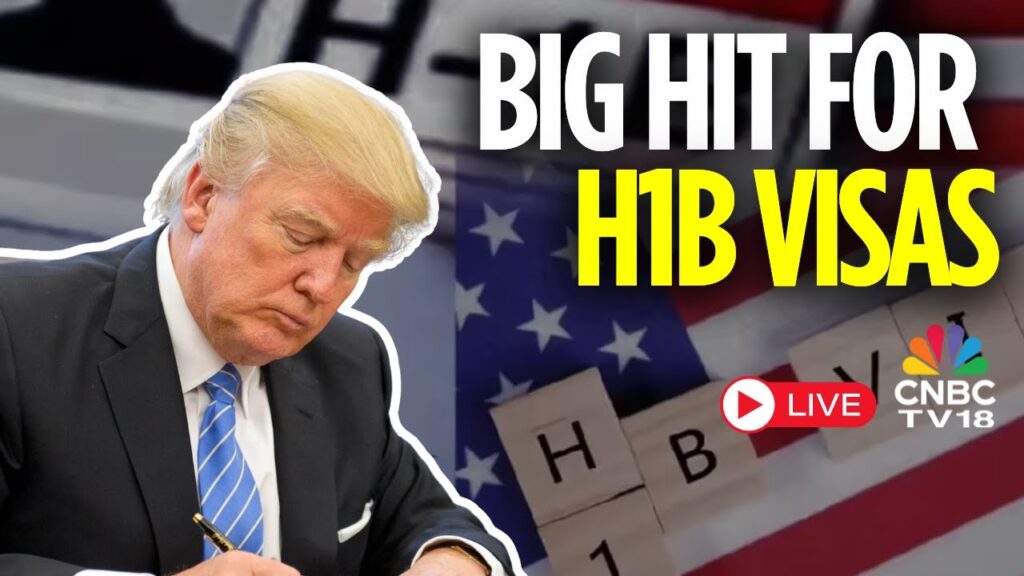
The Trump administration has transformed the H-1B visa program by implementing an unprecedented $100,000 annual fee per worker, effective September 21, 2025. This represents a massive increase from the previous fees of approximately $2,000-$5,000, marking what experts call the most significant shake-up in the program’s history.
Key Details of the H-1B Fee Increase:
- Effective Date: September 21, 2025, at 12:01 AM EDT
- Fee Structure: $100,000 annually per H-1B worker
- Target: Companies sponsoring skilled foreign workers
- Duration: Valid for 12 months but may be extended
Impact on Indian Professionals
The new H-1B fee structure will disproportionately affect Indian tech professionals, who constitute approximately 71% of all H-1B visa holders. Over 300,000 Indian professionals currently work in the United States on H-1B visas, primarily in the technology sector. Major Indian IT companies like Tata Consultancy Services (5,505 approvals), Infosys (2,004 approvals), and HCL America (1,728 approvals) are among the top beneficiaries of the program.
India’s Ministry of External Affairs has expressed concern about the policy’s “humanitarian consequences,” particularly regarding the potential disruption of families and ongoing projects. The ministry acknowledged industry concerns and is reviewing the new rules to understand their full implications.
Corporate Response and Market Impact
Major tech companies have issued urgent advisories to their H-1B employees. JPMorgan and Microsoft recommended that visa holders currently outside the US return before the September 21 deadline. The steep fee increase has already impacted stock prices, with shares of IT consulting firms like Accenture and Cognizant Technology falling following the announcement.
Clarification on Existing Visa Holders:
A senior US administration official later clarified that the $100,000 fee applies only to new H-1B applications, not existing visa holders or renewals. This provided relief to thousands of professionals who were advised to rush back to the US before the deadline.
Trump’s Million-Dollar Gold Card Program
Alongside the H-1B restrictions, Trump launched the “Trump Gold Card” program, offering expedited US residency for wealthy individuals and corporations willing to make substantial financial contributions.
Gold Card Program Structure
Individual Gold Card:
- Cost: $1 million contribution to the US Treasury
- Processing Fee: $15,000 (non-refundable)
- Benefits: Fast-track permanent residency through existing EB-1 or EB-2 visa categories
- Vetting: Background checks by Department of Homeland Security and State Department
Corporate Gold Card:
- Cost: $2 million per employee sponsored
- Transferability: Companies can transfer eligibility between employees after vetting
- Maintenance: Small annual maintenance fee applies
Platinum Card (Pending Congressional Approval):
- Cost: $5 million
- Benefits: Up to 270 days of US residency annually without taxation on foreign income
- Status: Requires Congressional approval before implementation

Revenue Projections and Implementation
Commerce Secretary Howard Lutnick projects the Gold Card program could generate over $100 billion in short-term revenue. The administration plans to make 80,000 Gold Cards available and expects full implementation within 90 days of the announcement.
The program aims to replace existing EB-1 and EB-2 visa categories, with other green card categories potentially suspended once the Gold Card system is fully operational. Trump stated, “The main thing is we’re going to have great people coming in, and they’re going to be paying”.
Strategic Immigration Realignment
These dual policies represent a fundamental shift in US immigration strategy, prioritizing wealthy investors while restricting access for skilled workers. The administration argues this approach will:
- Generate significant revenue for tax reduction and debt payment
- Protect American workers by deterring companies from hiring foreign talent at lower wages
- Attract high-value contributors to the US economy
- Reduce dependency on foreign skilled labor
Industry and Expert Reactions
NASSCOM’s Warning:
India’s leading IT industry body, NASSCOM, warned that the abrupt policy changes could disrupt global operations of Indian technology services companies and create “considerable uncertainty for businesses, professionals, and students”. The organization emphasized the need for adequate transition periods for policy changes of this magnitude.
Legal Challenges Expected:
Immigration attorneys are preparing to file lawsuits challenging the new H-1B fee structure, arguing it transforms the program into an elitist “pay-to-play” system. Critics contend the policies favor wealthy individuals while potentially harming America’s innovation ecosystem.
Looking Ahead
The Trump administration’s immigration overhaul reflects a calculated strategy to align immigration policy with economic priorities while generating substantial revenue. However, the long-term implications for America’s competitive advantage in attracting global talent remain uncertain.
The success of these policies will largely depend on their implementation, legal challenges, and the broader economic impact on industries heavily reliant on skilled foreign workers. As companies and individuals adapt to these new realities, the immigration landscape in the United States is poised for its most significant transformation in recent history.
The policies take effect imminently, leaving little time for adjustment and creating immediate pressure on companies, professionals, and families navigating America’s evolving immigration system.