





Nepal has been plunged into its worst political crisis in decades as Generation Z-led protests against corruption and a social media ban escalated into deadly violence, forcing Prime Minister K.P. Sharma Oli to resign and tragically claiming the life of a former prime minister’s wife.
Death Toll Rises as Protests Turn Violent
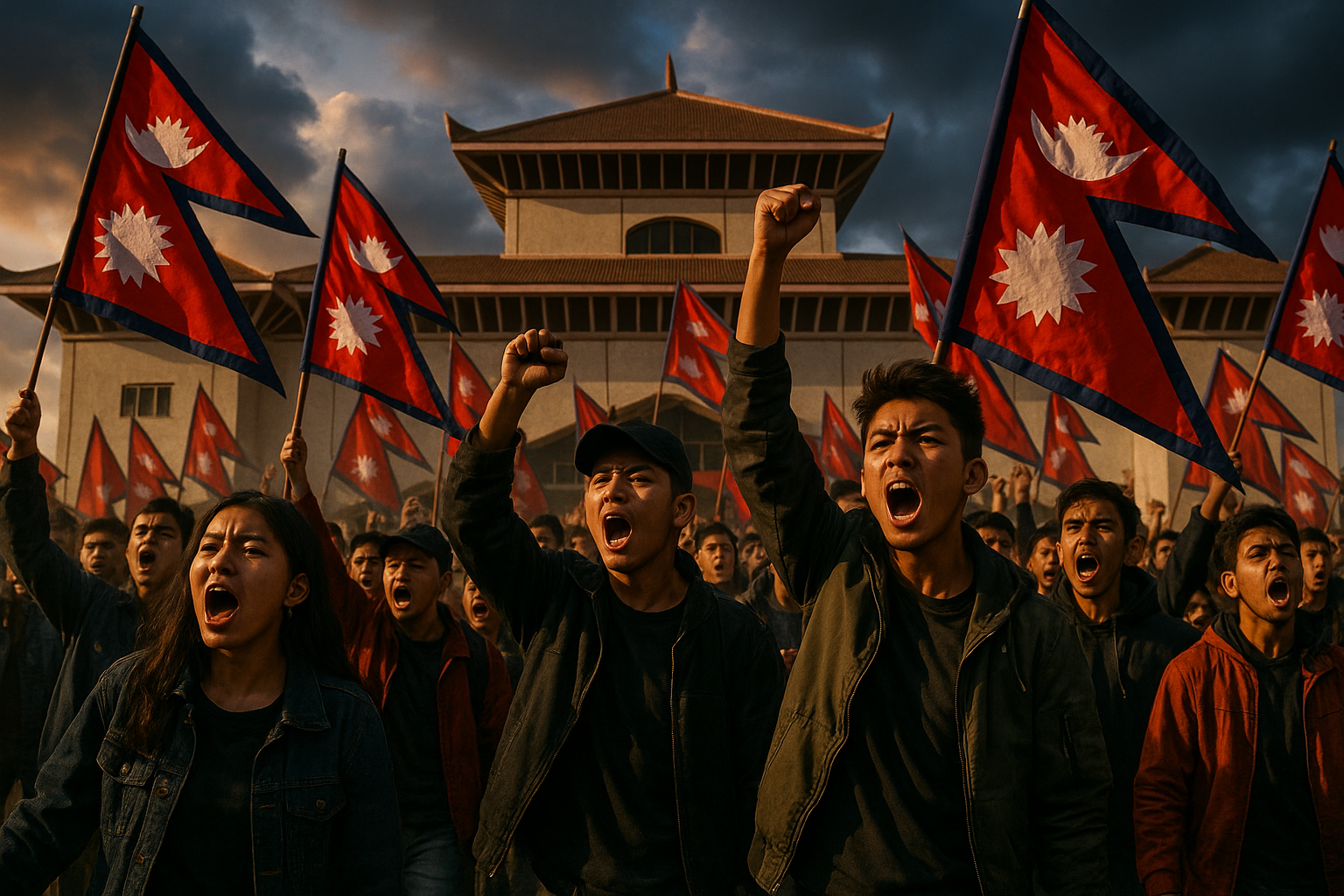
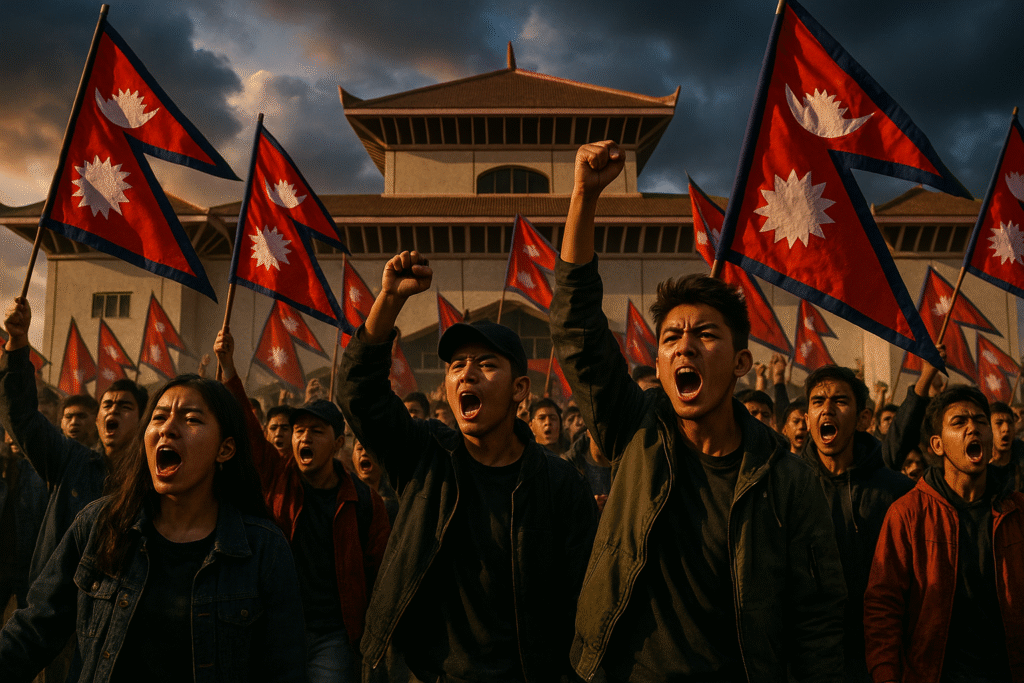
The demonstrations, which began on September 8, 2025, have resulted in at least 22 people killed and over 300 injured across the country. What started as peaceful protests by young Nepalis quickly descended into chaos when security forces used live ammunition, tear gas, water cannons, and rubber bullets against demonstrators, many of whom were school and college students in uniforms.
Human Rights Watch condemned the excessive use of force, with Deputy Asia Director Meenakshi Ganguly stating: “The police shooting of demonstrators in Kathmandu and across Nepal shows the administration’s appalling disregard for the lives of its own citizens and desperate need to suppress criticism”.
Tragic Death of Former Prime Minister’s Wife
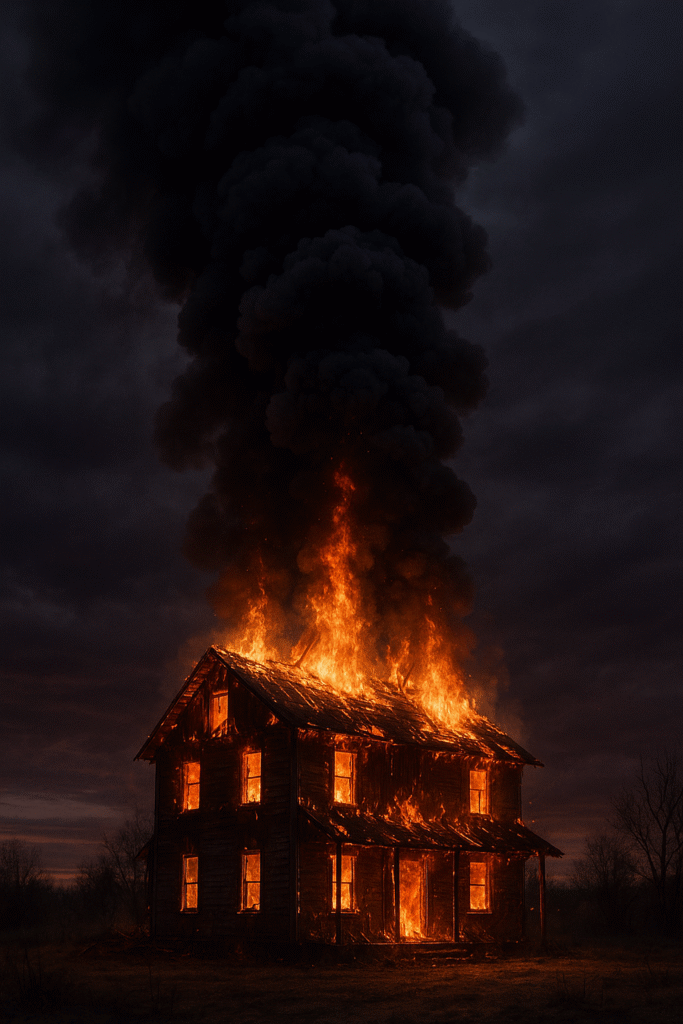
In a shocking escalation of violence, Rajyalaxmi Chitrakar, wife of former Prime Minister Jhalanath Khanal, died from severe burn injuries after protesters allegedly trapped her inside their house in Dallu and set it ablaze. The 75-year-old was rushed to Kirtipur Burn Hospital in critical condition but succumbed to her injuries during treatment.
Khanal, who served as Nepal’s 35th Prime Minister from February to August 2011, was a veteran politician and former chairman of the Communist Party of Nepal (Unified Marxist-Leninist). Born in 1950 in Ilam district, he had been involved in politics for over three decades and played significant roles in pro-democracy movements against the monarchy in 1990 and 2006.
The incident occurred as mobs throughout Tuesday targeted the homes of political leaders across Kathmandu, setting fire to the residences of current Prime Minister Oli, President Ram Chandra Paudel, and former Prime Ministers Pushpa Kamal Dahal ‘Prachanda’ and Sher Bahadur Deuba. The Nepali Army deployed helicopters to evacuate ministers from their homes as violence spread.
The ‘NepoKids’ Movement That Sparked Revolution
The protests were initially triggered by the government’s controversial decision to ban 26 social media platforms including Facebook, Instagram, WhatsApp, YouTube, and X on September 4, 2025, after they failed to register with authorities. However, the deeper catalyst was the viral “NepoKids” movement on TikTok and other platforms.
This online campaign exposed the lavish lifestyles of politicians’ children who flaunt luxury goods, expensive vacations, and designer clothing while ordinary Nepalis struggle with unemployment and poverty. Videos contrasting the opulent lives of political families with the hardships of young people – many forced to work abroad to support their families – went viral under hashtags like #NepoKids, #NepoBabies, and #PoliticiansNepoBabyNepal.
One TikTok user captured the movement’s essence: “Nepo Kids show off their lifestyle on Instagram and TikTok, but never explain where the money comes from”. With Nepal’s annual per capita income at just $1,300, the stark inequality highlighted by these videos resonated deeply with young protesters.
Parliament Stormed, Government Buildings Torched
The demonstrations reached a climax when thousands of protesters, many in school uniforms, marched toward Nepal’s Federal Parliament building in Kathmandu around 11 AM on September 8. Security forces responded with excessive force as protesters breached restricted areas and attempted to storm parliament.
By September 9, the violence had escalated dramatically with protesters setting fire to some of Nepal’s most iconic buildings, including:
- Federal Parliament building – completely torched by demonstrators
- Singh Durbar – the seat of Nepal’s government
- Sheetal Niwas – the presidential residence
- Party headquarters of major political parties including Communist Party of Nepal (UML) and Nepali Congress
The unprecedented destruction prompted authorities to impose curfews in multiple cities and close Tribhuvan International Airport, affecting international flights.
Youth Movement Demands Systemic Change
Unlike traditional political protests led by established parties, this movement was entirely youth-driven and leaderless, organized through social media platforms by groups like “Hami Nepal” (We Nepal). The protesters’ demands extended far beyond lifting the social media ban to include:
- Complete resignation of PM Oli’s government
- Formation of a national government
- Strict action against corrupt politicians
- Introduction of retirement age limits for political officeholders
- Guaranteed freedom of expression and press
- End to systemic corruption and nepotism
Student protester Narayan Acharya expressed the movement’s determination: “This government killed our friends. We will not stop until they are punished”. Another demonstrator, 21-year-old Bhumika KC, told BBC Nepali: “We want to see an end to corruption in Nepal. Leaders say one thing during elections but deliver another. They are the cause of so many problems”.
Rise of Balendra Shah: Gen Z’s Choice for Leadership
As Prime Minister Oli resigned on September 9, young protesters have rallied behind Balendra Shah (popularly known as Balen), the 33-year-old mayor of Kathmandu, as their preferred choice for interim Prime Minister.
Shah represents a new generation of political leadership – a civil engineer turned rapper turned politician who won Kathmandu’s mayoral election in 2022 as an independent candidate, defeating powerful party-backed opponents. His anti-corruption stance and unconventional background have made him a symbol of change for Nepal’s youth.
The rapper-turned-politician gained national attention through his hip-hop lyrics criticizing corruption: “All those who protect the country are fools. All leaders are thieves, looting the country and eating it up”. His subsequent political success led to recognition in Time magazine’s “Top 100 Personalities of 2023” and coverage in major international outlets.
Shah has expressed solidarity with the protesters while calling for restraint. In a Facebook post, he wrote: “Please remain calm. The loss of national resources is our collective loss. It is now necessary for all of us to show restraint. From here onwards, it is your generation that must lead the country”.
Regional Implications and International Response
The Nepal crisis marks the latest in a series of youth-led movements across South Asia, following similar upheavals in Sri Lanka (2022) and Bangladesh (2024) that successfully toppled governments. The pattern of Gen Z-driven political change is causing concern across the region about the stability of traditional political structures.
India, Nepal’s largest neighbor, has issued travel advisories urging citizens to defer travel to Nepal and asking those already there to remain indoors. The instability threatens to disrupt bilateral relations and regional cooperation initiatives.
The movement has drawn comparisons to protests in other countries where young people have challenged political dynasties and corruption, from the Philippines to Indonesia, suggesting a broader global trend of youth-led political activism.
What’s Next for Nepal
With Prime Minister Oli’s resignation accepted and the Home Minister Ramesh Lekhak also stepping down citing “moral responsibility,” Nepal faces an uncertain political future. President Ram Chandra Paudel has called for dialogue between all parties to resolve the crisis peacefully.
However, the protesters’ demands go beyond individual resignations to systemic change. The movement represents a fundamental challenge to Nepal’s traditional political establishment, dominated by the same parties and families for decades. With 21 MPs from the Rashtriya Swatantra Party also resigning en masse, the political system faces unprecedented pressure for reform.
The tragedy of Rajyalaxmi Chitrakar’s death has added a somber dimension to the protests, raising questions about whether the movement can maintain its momentum while preventing further violence. As Nepal searches for new leadership, the voice of Generation Z has fundamentally altered the country’s political landscape, demanding accountability, transparency, and an end to the corruption that has plagued the nation for generations.
The world watches as Nepal’s youth attempt to reshape their country’s future, but the path ahead remains fraught with challenges and the potential for continued instability in this critical Himalayan nation.