






French Government Crisis: France has plunged into yet another political crisis following the collapse of Prime Minister François Bayrou’s government on September 8, 2025, marking the second government to fall within nine months and deepening concerns about the nation’s financial stability and democratic governance.

Government Collapse and No-Confidence Vote
The 74-year-old Prime Minister François Bayrou lost a decisive confidence vote in the National Assembly by a margin of 364 votes against to 194 in favor. Opposition parties from both the far-left and far-right united to reject Bayrou’s controversial budget proposal, which included approximately €44 billion ($52 billion) in spending cuts aimed at reducing France’s ballooning deficit.
Bayrou, who had served for only nine months, formally submitted his resignation to President Emmanuel Macron on Tuesday, September 9. This marks an unprecedented period of instability, with France now preparing to appoint its fifth prime minister in less than two years.
The vote was triggered by Bayrou’s decision to stake his government’s survival on securing parliamentary support for his austere budget plan. Speaking before the vote, he warned lawmakers: “You have the power to bring down the government, but you do not have the power to erase reality. Reality will persist stubbornly: expenditures will continue to rise, and the already unbearable debt burden will become heavier and more costly”.
Economic Crisis at the Heart of Political Turmoil
Impact of the French Government on Europe
France’s political instability stems from a severe fiscal crisis that has reached alarming proportions. The country’s public debt has soared to €3.35 trillion, representing 113% of GDP, making it one of the highest debt-to-GDP ratios in the European Union, exceeded only by Greece and Italy.
The budget deficit reached 5.8% of GDP in 2024, nearly double the European Union’s 3% limit and the largest since World War II. France’s deficit is now the largest among all 27 EU member states. Interest payments on this debt have dramatically increased from €26 billion in 2020 to €66 billion in 2024, now exceeding the budgets for education or military spending.
The European Commission has initiated an excessive deficit procedure against France, formally warning the country to address its fiscal imbalance. Without significant action, France’s debt-to-GDP ratio is projected to reach 125% by 2030.
Political Fragmentation and Hung Parliament
The root of France’s governmental instability lies in the fragmented National Assembly that emerged from President Macron’s risky decision to call snap elections in June 2024. Following disappointing results in the European Parliament elections, Macron dissolved parliament hoping to secure a clear majority, but instead created a hung parliament where no party holds sufficient seats to govern effectively.
The current National Assembly composition shows:
- New Popular Front (left-wing coalition): 187 seats
- Ensemble (Macron’s centrist alliance): 159 seats
- National Rally and allies (far-right): 142 seats
Opposition parties control 330 of the 577 seats, making it extremely difficult for any government to pass legislation or budgets. This has resulted in France experiencing four prime ministers in less than two years: Élisabeth Borne, Gabriel Attal, Michel Barnier, and now the departing François Bayrou.
Next Steps and Potential Solutions
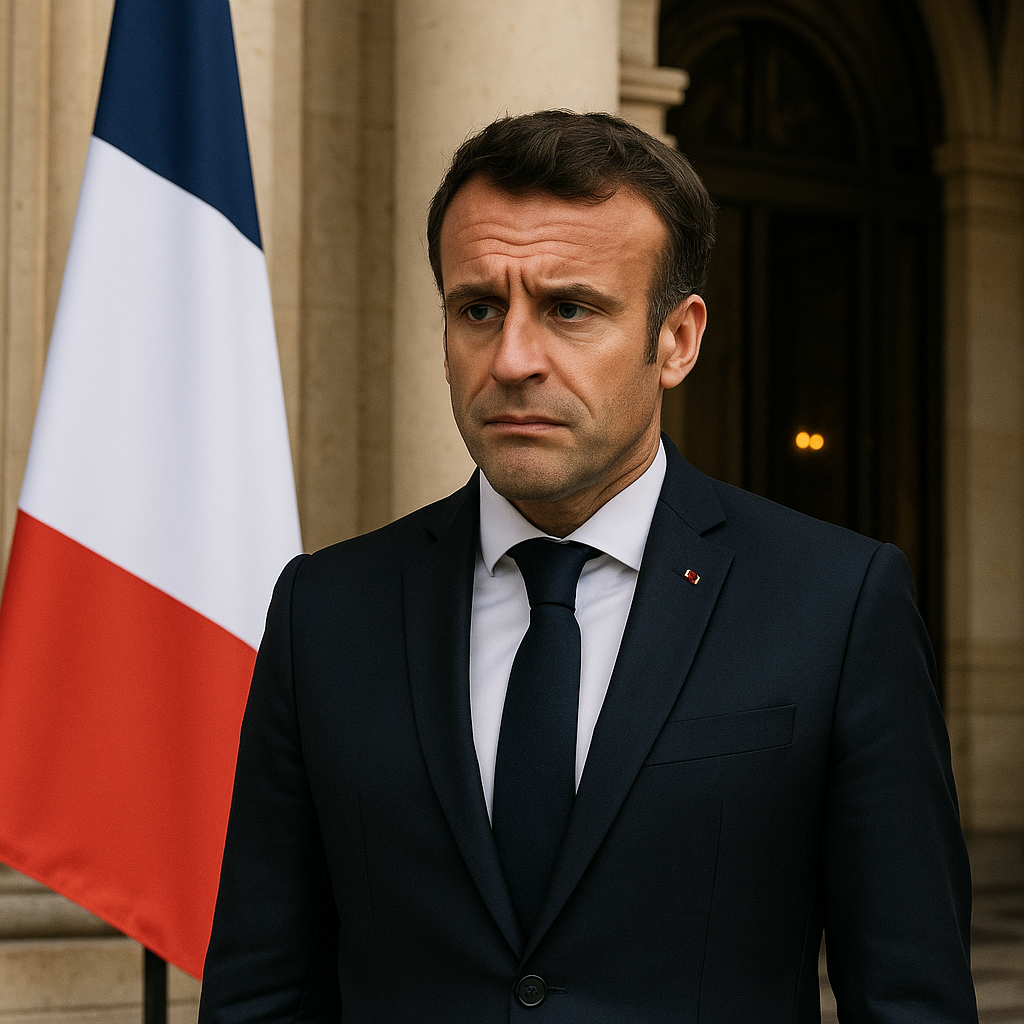
President Macron faces several challenging options as he seeks to appoint a new prime minister “in the coming days”:
Potential candidates being discussed include Defense Minister Sébastien Lecornu and Justice Minister Gérald Darmanin, both considered Macron allies. However, appointing another centrist figure risks facing the same parliamentary opposition that toppled previous governments.
Alternative approaches include:
- Appointing a moderate Socialist to potentially secure left-wing support
- Selecting a technocratic government
- Attempting a “grand coalition” with opposition parties
- Calling new parliamentary elections, though this risks further fragmentation
The far-right National Rally, led by Marine Le Pen, continues to demand snap parliamentary elections, arguing this would provide democratic legitimacy for budget decisions. However, new elections could potentially strengthen the far-right’s position and further complicate governance.
Economic and European Implications
The ongoing political crisis poses significant risks to both France’s economy and European stability. Financial markets have responded with increased borrowing costs for France, with 10-year government bond yields reaching 3.47%, creating a spread of 90 basis points over German bonds – the highest since the EU debt crisis 12 years ago.
European Union concerns center on France’s commitment to fiscal consolidation. The instability could weaken France’s influence in EU decision-making on critical issues including trade policy, industrial strategy, and climate initiatives. However, analysts suggest that while concerning, the situation is unlikely to immediately threaten eurozone stability due to stronger institutional frameworks established since the 2010s debt crisis.
Looking Ahead
The French crisis represents more than temporary political turbulence – it reflects fundamental challenges facing European democracies in an era of economic constraint and political polarization. With France being the eurozone’s second-largest economy, accounting for one-fourth of total EU public debt, the resolution of this crisis will have implications extending far beyond French borders.
The incoming prime minister will face the immediate challenge of passing a 2026 budget while navigating a hostile parliament, addressing urgent fiscal reforms, and restoring confidence in French governance – all while maintaining European commitments and avoiding further political fragmentation.
As France prepares for its fifth government in under two years, the crisis underscores the difficulty of implementing necessary but unpopular economic reforms in increasingly polarized democratic systems, providing a cautionary tale for other European nations facing similar fiscal and political pressures.