





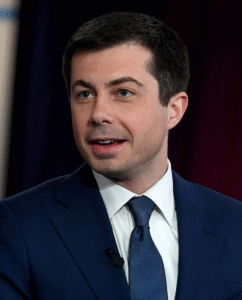

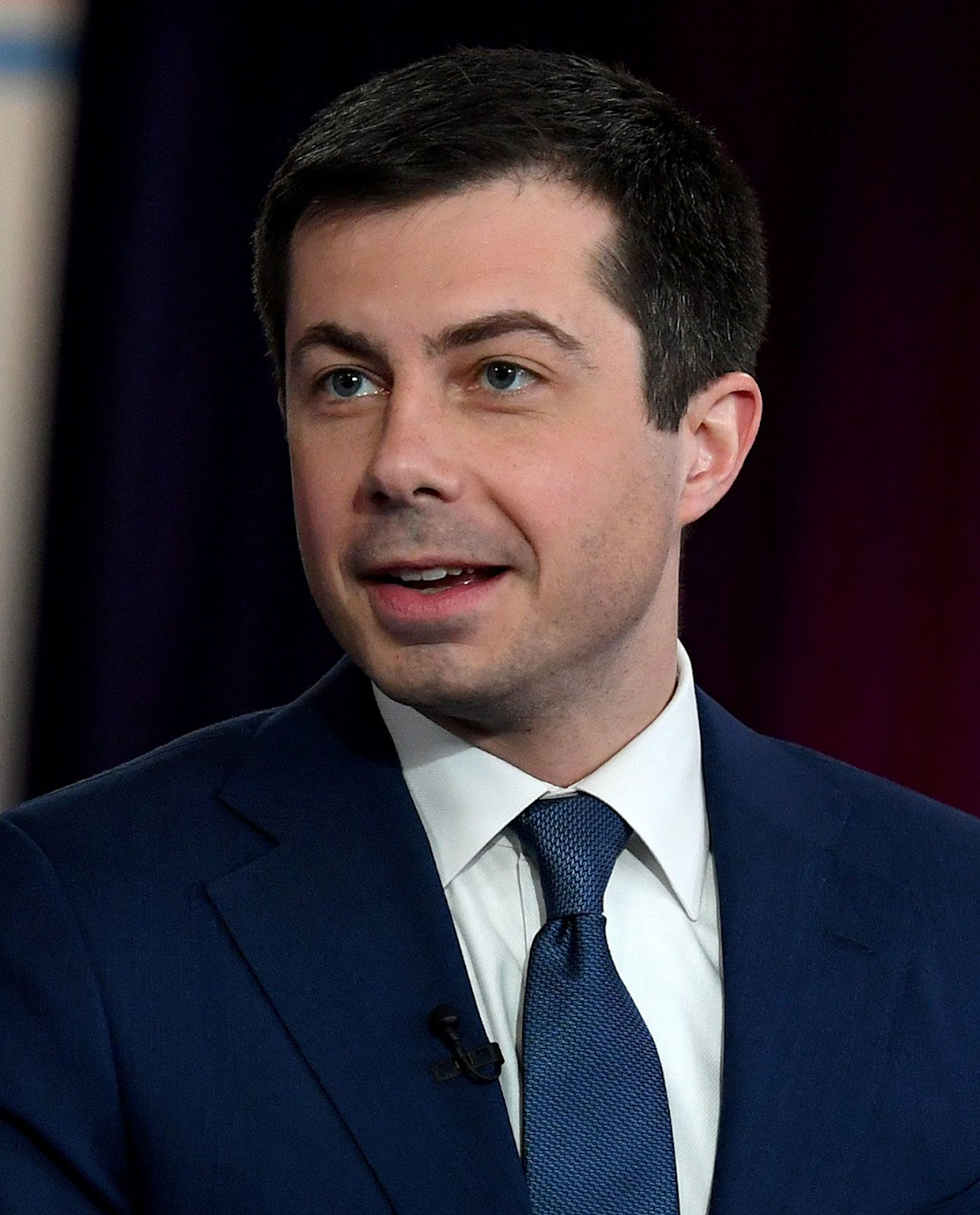
Pete Buttigieg, the 19th Secretary of Transportation under the Biden administration, has emerged as one of the most prominent political figures of his generation, transforming from a small-town mayor to a presidential candidate and Cabinet member. As his tenure at the Department of Transportation concluded in January 2025, Buttigieg has positioned himself as a key voice in the Democratic Party while managing significant infrastructure investments and navigating complex political dynamics surrounding the 2024 election cycle.
The former South Bend mayor’s recent candid remarks about President Biden’s reelection bid and his role in Vice President Kamala Harris’s vice-presidential selection process have thrust him back into the national spotlight, reinforcing his status as a leading contender for the 2028 presidential election.
Transportation Secretary Legacy: Infrastructure Achievements and Challenges
Historic Infrastructure Investment Leadership
During his four-year tenure as Transportation Secretary, Buttigieg oversaw the implementation of the largest infrastructure investment in American history through the Bipartisan Infrastructure Law. The Department of Transportation allocated billions of dollars across more than 40 new programs, supporting tens of thousands of projects nationwide that will continue benefiting communities for decades.
Under Buttigieg’s leadership, the department achieved remarkable progress in multiple areas. Traffic fatalities declined for ten consecutive quarters after reaching 42,939 deaths in 2021, representing a significant victory for road safety initiatives. The administration announced nearly $2.9 billion through the Safe Streets and Roads for All grant program, covering approximately 75% of the U.S. population across more than 1,600 communities.
Supply Chain and Aviation Sector Improvements
Buttigieg played a crucial role in addressing pandemic-related supply chain disruptions, implementing measures that helped reduce long-dwelling container congestion at America’s largest ports by half. His leadership during various transportation crises, from airline system failures to freight rail safety concerns following the Norfolk Southern derailment in 2023, demonstrated his ability to manage complex, high-stakes situations.
The aviation sector saw significant improvements under Buttigieg’s oversight, with flight cancellations decreasing while air traffic controller hiring increased. He also spearheaded the largest expansion of airline passenger rights and accessibility in a generation, implementing new regulations to protect travelers with disabilities and improve overall passenger experience.
Environmental and Economic Impact
The Transportation Department under Buttigieg’s leadership emphasized climate action and economic development. Companies announced more than $270 billion in investments in American clean energy and electric vehicle manufacturing since 2021, creating new manufacturing jobs and revitalizing communities previously left behind by economic transitions.
At least 40 electric vehicle charger factories were announced or opened in the United States during this period, representing over half a billion dollars in investment in the American charging network. Tesla also opened portions of its Supercharger network to non-Tesla vehicles, expanding access to charging infrastructure nationwide.
Political Evolution and 2024 Election Dynamics
Candid Assessment of Biden’s Reelection Decision
In a September 2025 interview on NBC’s “Meet the Press,” Buttigieg made headlines by stating that President Biden “should not have run” for reelection in 2024. His remarks aligned with similar sentiments expressed by Vice President Harris in her memoir “107 Days,” where she described the reluctance of Biden’s inner circle to challenge his reelection plans as “recklessness”.
Buttigieg emphasized that the decision was ultimately Biden’s alone, stating, “It literally was his decision. Nobody else was able to make that decision.” However, he acknowledged that an earlier decision not to run might have resulted in a better outcome for the Democratic Party.
Harris’s Vice Presidential Selection Process
Perhaps the most revealing political development came through excerpts from Harris’s memoir, which disclosed that Buttigieg was her “first choice” for running mate in the 2024 election. Harris wrote that Buttigieg “would have made an excellent partner — if I were a straight white male,” highlighting the complex considerations involved in building a national ticket.
Harris explained her reasoning: “We were already asking a lot of America: to accept a woman, a Black woman, a Black woman married to a Jewish man. Part of me wanted to say, Screw it, let’s just do it. But knowing what was at stake, it was too big of a risk.” She noted that Buttigieg likely understood this decision, describing it as their “mutual sadness”.
The revelation underscores both Buttigieg’s continued prominence within Democratic leadership circles and the ongoing challenges facing LGBTQ+ politicians seeking national office. As the first openly gay person confirmed to serve in a president’s Cabinet, Buttigieg has consistently broken barriers while maintaining broad political appeal.
2028 Presidential Prospects and Political Positioning
Early Signs of Presidential Ambition
Buttigieg’s recent media appearances and public statements suggest active preparation for a potential 2028 presidential campaign. His willingness to criticize Biden’s decision-making and his measured responses to political developments demonstrate the careful positioning typical of prospective presidential candidates.
Political observers note that Buttigieg’s criticism of Biden serves multiple purposes: distancing himself from the administration’s electoral failures while positioning himself as a truth-telling leader willing to make difficult assessments. This approach could prove valuable in primary elections where Democratic voters may seek candidates who can honestly assess past mistakes.
Continued Political Engagement
Following his departure from the Transportation Department, Buttigieg has maintained high visibility through media appearances, speaking engagements, and political commentary. His participation in town halls and policy discussions suggests an active effort to maintain his national profile while developing policy positions for future campaigns.
In a July 2025 NPR interview, Buttigieg warned that Democrats “can’t go back to pre-Trump normal,” suggesting his 2028 campaign may focus on fundamental changes to democratic institutions and political norms rather than restoration of previous approaches.
Personal Background and Political Foundation
Military Service and Early Career
Before entering politics, Buttigieg served seven years as an officer in the U.S. Navy Reserve, including a deployment to Afghanistan in 2014 while serving as mayor of South Bend. This military experience has provided credibility on foreign policy and national security issues, distinguishing him from many other Democratic politicians.
His tenure as mayor of South Bend from 2012 to 2020 established his reputation as an effective executive capable of working across party lines. During his leadership, the city experienced economic growth with household income increasing, poverty falling, and unemployment cutting in half.
2020 Presidential Campaign Breakthrough
Buttigieg’s 2020 presidential campaign marked his emergence as a national political figure. Despite beginning as a relatively unknown mayor, he secured victory in the Iowa caucuses and strong finishes in early primary states before withdrawing and endorsing Joe Biden in March 2020.
His campaign demonstrated remarkable fundraising ability and communication skills, particularly his talent for “framing liberal arguments in a way that makes it possible for conservatives to hear them,” as Harris noted in her memoir.

Policy Priorities and Future Vision
Infrastructure and Climate Focus
Buttigieg’s tenure at Transportation established him as a leading voice on infrastructure modernization and climate action. His emphasis on connecting transportation investments to broader economic and social justice goals, including the Justice40 initiative ensuring 40% of benefits flow to underserved communities, suggests these themes will feature prominently in future campaigns.
The department exceeded the Justice40 goal under his leadership, with 55% of benefits reaching communities most in need. This record provides a foundation for arguments about effective government intervention and equitable policy implementation.
Technology and Innovation Advocacy
Throughout his government service, Buttigieg has emphasized the importance of technological innovation in transportation systems. His support for electric vehicle infrastructure, autonomous vehicle development, and smart transportation networks positions him well for discussions about America’s technological competitiveness.
Challenges and Criticisms
Administrative Controversies
Buttigieg faced criticism during his tenure for various transportation crises, including extended paternity leave during supply chain disruptions and responses to airline system failures. Critics argued that he was sometimes absent during critical moments, though supporters noted the systemic nature of many transportation challenges.
The slow rollout of electric vehicle charging infrastructure, despite significant federal investment, provided ammunition for political opponents questioning the effectiveness of government spending programs.
Political Positioning Complexities
As Buttigieg prepares for potential future campaigns, he must navigate the complex dynamics of being both an insider in the Biden administration and a critic of certain decisions. His recent comments about Biden’s reelection bid represent an attempt to establish independence while maintaining credibility with Democratic voters.
Pete Buttigieg’s journey from small-town mayor to Transportation Secretary to potential 2028 presidential candidate illustrates the evolving nature of American political leadership. His combination of executive experience, policy expertise, military service, and communication skills positions him as a formidable political figure, while his identity as an openly gay married father represents continued progress in American political representation.
As the Democratic Party evaluates its future direction following the 2024 election results, Buttigieg’s record of infrastructure achievement, willingness to offer honest assessments, and ability to communicate complex policy issues to diverse audiences make him a compelling figure for national leadership. Whether this combination of experience and appeal will translate into presidential success remains to be seen, but his continued prominence in national political discussions suggests he will remain a significant force in Democratic politics for years to come.